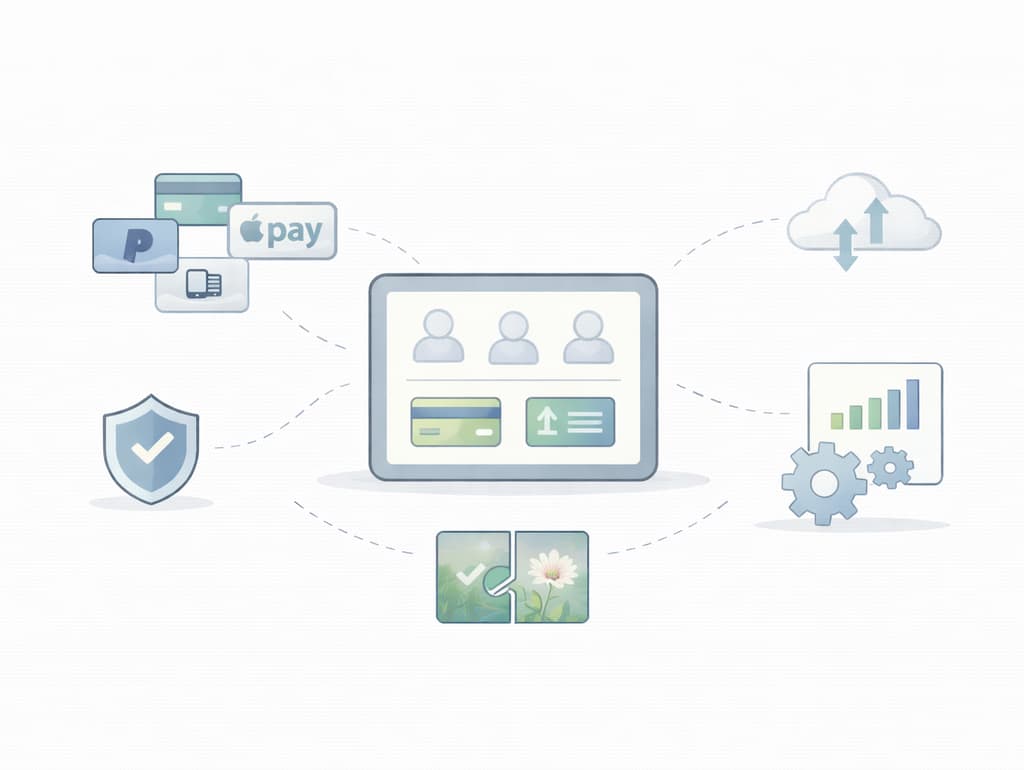
Effective Digital Solutions for Modern Platforms
Modern platforms need smart digital solutions to stay competitive. High-volume transaction environments drive payment innovation forward. Platforms like Amerikaanse online casino sites have pioneered seamless payment processing that balances speed with security. These same principles now benefit all digital platforms that handle user transactions and data.
Digital solutions have evolved beyond basic functionality to become strategic assets. Businesses face constant pressure to deliver seamless experiences.
Users expect speed, security, and convenience at every touchpoint. These demands push companies to adopt innovative solutions that meet rising expectations.
Understanding Modern Platform Needs
Today’s platforms operate in complex environments. They must handle multiple payment methods, process data securely, and scale with growth. The challenge lies in choosing solutions that integrate smoothly without disrupting existing operations.
Platform owners seek flexibility. They want systems that adapt to changing requirements and new technologies. Static solutions create bottlenecks. Dynamic ones enable growth and evolution over time.
What makes a solution truly effective? It solves real problems without adding complexity. The best tools work quietly in the background while users interact naturally with the platform.
Payment Integration Solutions
Payment processing sits at the heart of platform operations. Users need quick, secure ways to complete transactions. Modern payment solutions offer multiple options to accommodate different preferences and regional requirements.
Integration quality matters more than the number of options. A poorly integrated payment system frustrates users and increases abandonment rates. Smooth processing builds trust and encourages repeat interactions. Many businesses leverage specialized payment providers to streamline operations. The right payment infrastructure reduces friction while maintaining security standards.
Regional payment preferences vary significantly. What works in one market may fail in another. Smart platforms offer localized payment solutions that match user expectations in different geographic areas.
Security and User Experience
Security cannot be an afterthought. Every digital solution must protect user data and financial information. Strong security measures prevent breaches and maintain platform credibility.
Balancing Protection and Convenience
Users want security without friction. Heavy-handed security measures that slow down processes drive people away. The key lies in implementing protection that works invisibly while remaining effective.
Modern authentication methods provide this balance. Biometric verification and tokenization offer strong security with minimal user effort. These technologies work quickly while maintaining high protection standards.
Data Privacy Compliance
Regulatory requirements continue to evolve. Platforms must adapt to changing privacy laws across different jurisdictions. Compliance builds trust and avoids costly penalties.
Transparent data practices strengthen user relationships. People appreciate knowing how their information is used and protected. Clear privacy policies and user controls demonstrate respect for personal data.
Scalability Considerations
Growth creates new challenges. A solution that works for thousands of users may fail with millions. Planning for scale from the beginning prevents painful migrations later.
Infrastructure choices impact scalability directly. Cloud-based solutions offer flexibility that traditional hosting cannot match. They allow platforms to expand capacity on demand without major overhauls.
Performance monitoring identifies bottlenecks before they affect users:
- Response time tracking reveals slow processes.
- Resource usage analysis shows capacity constraints.
- Error rate monitoring catches problems early.
- User behavior patterns guide optimization efforts.
Implementation Best Practices
Successful implementation requires careful planning. Rushing adoption of new solutions often backfires. A methodical approach reduces risks and ensures smooth transitions.
Start with clear objectives. What problems need solving? What outcomes define success? Specific goals guide solution selection and implementation strategies.
Phased Rollout Strategy
Gradual implementation minimizes disruption. Testing with small user groups reveals issues before they affect everyone. This approach allows adjustments based on real feedback.
Monitor performance throughout rollout phases. Track key metrics to ensure solutions deliver expected benefits. Quick adjustments keep implementation on track toward original goals.
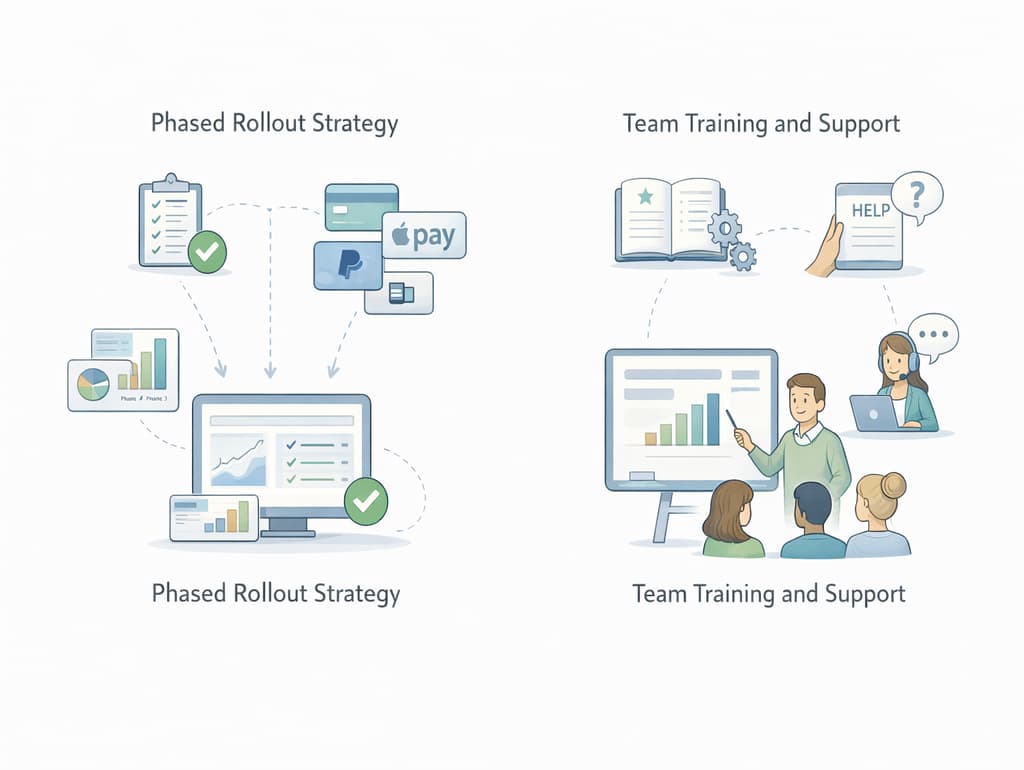
Team Training and Support
Technology succeeds only when people can use it effectively. Comprehensive training prepares teams to leverage new solutions fully. Ongoing support addresses questions and resolves issues quickly.
Documentation matters as much as training. Clear guides help users troubleshoot problems independently. Good documentation reduces support burden while empowering users.
Future-Proofing Your Platform
Technology changes rapidly. Solutions that seem cutting-edge today may become outdated tomorrow. Choosing adaptable systems protects investments and maintains competitiveness.
API-first architectures enable flexibility. They allow platforms to integrate new services without major system changes. This modularity supports evolution as needs and technologies shift.
Modern platforms need digital solutions that deliver real value. The right choices in payment processing, security, scalability, and implementation create foundations for sustainable growth. Success comes from balancing current needs with future possibilities.